
Last updated October 30, 2026
 Home additions & ADU
 Kitchen remodeling
 Bathroom remodeling
 Roofing
 Windows & doors
 Driveway & pavers
 Fence
Free written scope consultation - allowances, timeline, and change-order rules on paper before a single trade is scheduled
DIY vs Professional Construction: The Tustin Homeowner’s Decision Guide
Here’s a number most Tustin homeowners never see coming: according to California Contractors State License Board data, unlicensed contracting activity generates an estimated $100 million to $300 million in annual consumer losses statewide. The homeowners footing that bill aren’t usually victims of shoddy workmanship alone – they’re paying for permit violations, failed inspections, insurance denials, and rework costs that never appeared in their original savings calculation. This guide walks through the legal framework that governs DIY work in California, the insurance exposure most homeowners don’t discover until a claim is denied, and a practical matrix for deciding which projects belong in your hands and which belong with a licensed contractor in Tustin.
Styles & brands we work with
Quick Answer
California law allows homeowner-occupants to self-perform many construction tasks on their own residence without a contractor’s license, provided they pull permits where required and do the work themselves. The real dividing line isn’t skill – it’s whether you can legally pull the permit, whether your insurance will cover a loss caused by your own work, and whether the hidden costs of DIY rework, tooling, and failed inspections erase the labor savings. For structural, electrical, plumbing, and roofing work, hiring a licensed general contractor in Tustin is usually the cheaper decision once risk is priced in.
Table of Contents
- What California Law Actually Allows Homeowners to DIY
- How Tustin’s Local Codes Layer on Top of State Law
- The Insurance Implications of DIY Construction
- The 12-Project Risk Matrix: What You Can Do vs. What You Shouldn’t
- The Hidden Costs of DIY That the Savings Math Ignores
- How to Be a Productive DIY Partner on a Pro Project
- Common Mistakes to Avoid
- When to Call a Professional
- Frequently Asked Questions
- The Bottom Line
What California Law Actually Allows Homeowners to DIY
California Business and Professions Code Section 7044 creates a narrow but real exemption: a homeowner-occupant may perform work on their own residence without holding a contractor’s license, provided the work is not part of a sale or rental transaction and the homeowner does the work themselves or with unpaid help. You can legally install your own water heater in Tustin. You can replace your own bathroom vanity, lay flooring, hang drywall, and paint every wall in the house. The exemption exists because the state recognizes that forcing a licensed contractor onto every minor home task would be absurd.
But the exemption has sharp edges. Here’s what it does not allow:
- Hiring unlicensed labor. You cannot pay a handyman more than $500 (including materials) for work that requires a contractor’s license. That threshold is total project cost, not per day. Cross it with a handyman and you are now the employer of an unlicensed contractor under California law, with all the liability that entails.
- Delegating the permit authorization. The permit belongs to the person doing the work. If you pull a permit as an owner-builder and then hire someone to do the actual construction, that person must be licensed, and the permit must reflect their license. Owner-builder permits are monitored by the CSLB precisely because of this abuse pattern.
- Work on a home you intend to sell or rent. The owner-builder exemption applies to your principal residence. If the property is a rental, a flip, or a home you’re preparing for sale, you must use licensed contractors for any work requiring a license.
In our experience working as a general contractor in Tustin, the most common legal misstep we see isn’t a homeowner doing work they shouldn’t – it’s a homeowner hiring an unlicensed helper for work that crossed the $500 threshold, then discovering at permit inspection that the arrangement was illegal. The city’s building department sees this pattern regularly on kitchen and bath remodels where the homeowner tried to save labor costs on the rough-in phase.
How Tustin’s Local Codes Layer on Top of State Law
Tustin operates under the California Building Standards Code (Title 24) with local amendments administered by the city’s Building Division. What that means in practice: state law sets the floor, and Tustin adds its own requirements on top. Homeowners doing DIY work in older Tustin neighborhoods – the 1960s and 1970s tracts around Tustin Meadows, the Crawford Canyon area, and parts of unincorporated North Tustin – will frequently encounter code-upgrade triggers that a newer home wouldn’t face.
The most consequential Tustin-specific rules for DIYers:
- Plan check is not optional for structural work. Tustin requires plan review for most structural modifications, including window enlargements, load-bearing wall removals, and any roof work. The plan check process is not a formality – it’s a technical review that catches load-path errors, shear-wall deficiencies, and seismic detailing problems before they get built. Homeowners who skip it and build anyway are creating unpermitted work that will surface during resale inspection.
- Seismic retrofit requirements for older homes. Tustin sits in a high-seismic hazard zone. Homes built before roughly 1980 often require foundation bolting, cripple-wall bracing, or shear-wall upgrades as a condition of permit approval for larger remodels. A homeowner who opens up a wall for a kitchen remodel may discover a mandatory retrofit scope they never budgeted for.
- Title 24 energy compliance extends beyond lighting. California’s energy code applies to windows, insulation, water heaters, and HVAC work. Tustin enforces it on permits for any project touching those systems. A DIY window replacement that skips the Title 24 documentation will fail inspection and require correction.
The pattern we’ve observed in Tustin over the years is straightforward: the homeowners who run into trouble are overwhelmingly the ones who pulled the permit after starting work, not before. The city’s inspectors are reasonable, but they cannot approve work they cannot see, and opened walls that hid the rough-in work create instant red flags. For a deeper look at how this affects a full-scale remodel, see our guide to home remodeling in Tustin.
The Insurance Implications of DIY Construction
Here is the scenario most DIY savings calculations never include: you install a water heater yourself, legally, under the owner-builder permit. Two years later, a fitting fails and floods 800 square feet of flooring. You file a claim. The carrier’s adjuster asks for the permit number, the inspection sign-off, and proof that the installation complied with the manufacturer’s installation requirements and local code. If any piece of that chain is missing – and for most DIY work, something is missing – the claim can be reduced or denied outright.
California insurance law does not give homeowners a pass on DIY defects. The standard HO-3 policy covers sudden and accidental water damage, but it also contains exclusions for damage caused by faulty workmanship, improper installation, and latent defects. The key legal question is not “did the homeowner do it themselves” but “did the homeowner’s own negligence cause the loss.” A professional contractor’s completed-operations insurance exists specifically to absorb that liability. When you DIY, that liability transfers to you, personally, with no policy behind it.
Specific DIY tasks that carry the highest insurance risk in Tustin:
- Water heater replacement. The single most common DIY job that generates denied claims. Proper installation requires permit, inspection, relief-valve piping to code, and combustion-air requirements for gas units. Skip any element and a flood or fire claim can be declined.
- Roof patching and re-roofing. If your DIY roof repair leaks and causes interior damage, the carrier will evaluate whether the repair was completed to the standard of a licensed tradesperson. Most aren’t. Tustin’s rain season exposes this fast – the atmospheric river events that hit Orange County test roofs harder than homeowners expect.
- Electrical panel work and circuit additions. A DIY electrical installation that causes a fire is not covered by most policies when the work was unpermitted. The carrier doesn’t have to prove the work caused the fire if the policy excludes unpermitted electrical modifications – and many now do.
- Plumbing modifications behind walls. Hidden leaks from DIY connections are the slow-burn version of the water heater problem. Damage accumulates for months, the adjuster finds the amateur connection, and the claim gets classified as faulty workmanship rather than sudden loss.
The practical takeaway for Tustin homeowners: if the work touches water supply, drainage, gas, or electricity, and you do it yourself, you are self-insuring the worst-case outcome. The labor savings on a water heater install might be $400 to $600. The uninsured loss from a failed install can run $15,000 to $40,000 in a typical Tustin single-story ranch. The math only works if nothing ever goes wrong.
The 12-Project Risk Matrix: What You Can Do vs. What You Shouldn’t
We’ve broken the most common Tustin home projects into four tiers, based on combined legal, safety, and financial risk. This isn’t a skill assessment – it’s a liability assessment. A talented homeowner can still make a legal or insurance error that a mediocre licensed contractor would never make, simply because the contractor carries the license, the permit history, and the insurance that the homeowner doesn’t.
Tier 1: Safe DIY – Low Legal and Insurance Exposure
- Interior painting and trim. No permit required. No insurance exposure beyond ordinary damage (which your policy covers). Quality difference between pro and DIY is visible but fixable. Material cost for a 1,500-sq-ft Tustin home runs $400 to $900 for good paint and supplies.
- Cabinet hardware and fixture replacement. Swapping pulls, hinges, faucets (with existing shutoffs), and light fixtures (with existing wiring) is legal, low-risk, and reversible. No permit needed. This is the highest-value DIY work for effort expended.
- Flooring installation – floating LVP, laminate, and carpet tile. No permit required for floating floor systems in most cases. Risk is low if subfloor is sound. Tustin’s mild climate makes moisture a non-issue compared to coastal communities, so the main risk is cosmetic, not structural.
- Landscape and hardscape that doesn’t affect drainage. Planting, mulching, paver patios under 30 inches in height (where they don’t alter site drainage), and fencing under 7 feet can generally be done without a permit in Tustin, though fence height and property line rules deserve a call to the city first.
Tier 2: Cautious DIY – Legal With Permits, Real Insurance Risk
- Water heater replacement. Legal for owner-occupants with a permit and inspection. Insurance risk is high if not done exactly to code. Tustin requires the permit. Gas units require proper venting and combustion air – errors here are dangerous, not just expensive.
- Bathroom fixture swap (same-location). Replacing a vanity, toilet, or shower trim in the same location is legal for a homeowner. Moving plumbing lines is not. The line between “fixture swap” and “plumbing modification” is where DIYers get into permit violations and denied claims.
- Drywall repair and patching. No permit for cosmetic patching. But if the drywall work follows a covered repair, the work must match the original fire rating and assembly. In garages and between units, that matters. Tustin inspectors review this on final for any permitted project.
Tier 3: Professional Strongly Recommended – High Legal or Safety Bar
- Roof replacement. California requires a C-39 roofing license for any roof work over $500 in value. An owner-occupant can technically self-perform a re-roof, but the permit requirements, material specs, and inspection thresholds make it the most failed DIY project in Tustin. Wind uplift, flashing details, and valley construction are where amateur roofs fail, usually during the first heavy rain season. Tustin’s exposure to Santa Ana winds and periodic heavy rain events makes roof detailing unforgiving.
- Electrical panel upgrade or new circuit work. This is the one DIY category we tell every Tustin homeowner to avoid entirely. Panel work requires load calculations, proper grounding and bonding, AFCI/GFCI requirements under current code, and an inspection by the city. A panel upgrade is also the single highest-value home improvement for insurance and safety reasons – and the most dangerous to do wrong.
- Structural wall removal or modification. Any wall bearing roof or floor load requires an engineered plan in Tustin. Removing a wall without a plan is not a legal gray area – it’s an illegal modification that will surface at resale and create seller disclosure liability. The plan itself typically costs $800 to $2,500 depending on the complexity of the load path.
- Window replacement. Tustin enforces Title 24 energy standards on window replacements, and most homeowners who DIY this fail the energy documentation requirement, then fail inspection. The window itself can be replaced correctly, but the paperwork and flashing details are where it falls apart. Water intrusion around DIY window installs is one of the most common insurance claims we see referenced in Tustin remodels.
Tier 4: Licensed Contractor Only – Not a DIY Option Under Any Circumstance
- Foundation work. No legal pathway for DIY. Foundation repair in Tustin’s expansive soil zones requires geotechnical evaluation, engineered plans, and specialized equipment. A failed DIY foundation repair is the most expensive mistake a homeowner can make on a single project.
- Structural framing for additions or ADUs. Tustin’s ADU ordinance allows accessory dwelling units under specific conditions, and the structural work must be permitted, engineered, and inspected. The prefab ADU brands we work with – including Abodu and Dvele – deliver units that are factory-built to California code, but the site work, foundation, and utility connections still require licensed trades.
- HVAC system replacement or duct modification. Refrigerant handling requires EPA certification. Gas line work requires a C-36 or C-20 license. The legal barriers alone rule this out, before you consider the efficiency and comfort consequences of improper system sizing.
The Hidden Costs of DIY That the Savings Math Ignores
The standard DIY savings calculation compares material cost plus a contractor’s labor estimate against material cost alone. That formula is wrong. Here’s what it misses, and what we’ve seen repeatedly in Tustin homes where a DIY project stalled or failed:
1. Permit denial and resubmission costs. Tustin’s plan check process catches errors before construction starts – that’s its purpose. When you submit DIY plans that don’t meet current code, you get a correction list. Each resubmission takes time, and if you’re paying for plan review by the hour (which Tustin does for some permit types), the clock keeps running. A homeowner who doesn’t know how to read a shear-wall schedule or a Title 24 energy report can burn hundreds of dollars on failed plan checks before any work begins.
2. Rework when inspection fails. This is the line item nobody budgets. A failed rough-in inspection for plumbing or electrical work means the inspector leaves, the work stops, and you reopen walls to fix what was wrong. The demolition and re-install cost is entirely on you. In our experience, first-time DIYers fail rough-in inspections at a rate that makes the “savings” disappear quickly. A failed inspection can add $500 to $3,000 to a project, depending on what needs to be corrected.
3. Tool and equipment rental. The big-box store sells you the materials; they don’t give you the tools. A tile saw for a bathroom floor runs $50 to $80 per day. A demolition hammer for removing a concrete patio runs $80 to $150 per day. A drywall lift for a ceiling install is $35 to $50 per day. On a medium-size project, tool rental alone can consume 8% to 15% of the labor savings you thought you were capturing.
4. The time cost priced at your actual earning rate. If you earn $60 per hour at your job, your DIY labor isn’t free – it’s $60 per hour of opportunity cost, plus the weekend time you’re giving up. A bathroom remodel that takes a contractor two weeks will take a working homeowner four to six months of weekends. The leisure time lost is real, and so is the relationship strain that long projects place on a household. We’ve heard Tustin homeowners describe DIY remodels as “a part-time job that paid nothing.”
5. Product selection errors. This is the hidden cost most people don’t see coming: buying the wrong material for the application. A homeowner picks a flooring product that won’t work over the existing subfloor, or a countertop material that needs different cabinet support, or a window that fails the energy code they didn’t know applied. The wrong product either fails inspection, fails in service, or gets returned with restocking fees. A contractor who has specified Cambria quartz, KraftMaid cabinetry, and Wellborn cabinet lines for years knows what works in a Tustin home and what doesn’t. The homeowner learns by paying for mistakes.
How to Be a Productive DIY Partner on a Pro Project
Here’s a path most Tustin homeowners never consider: you don’t have to choose between all-DIY and all-contractor. The most cost-effective approach on larger remodels is a hybrid, where you handle the finish-level work and the contractor handles the permit, structural, and mechanical scope. A licensed general contractor in Tustin will typically allow this, with clear boundaries set in the contract and the schedule. Here’s how to do it right:
- Negotiate the scope split before signing. The contract should list exactly which tasks are contractor-performed and which are owner-performed. Vague language like “owner to assist with finishes” creates disputes. We specify the exact items: “owner to paint all walls after final inspection,” “owner to install cabinet hardware.” Clarity up front prevents schedule conflicts and liability arguments later.
- Take the tasks that can’t create a permit or insurance problem. Painting, trim installation, cabinet hardware, mirror hanging, closet systems, and landscape restoration are all safe owner-tasks. These are also the tasks where contractor labor cost is highest relative to skill required – so your labor savings are real.
- Stay out of the permit path. Never take on electrical, plumbing, structural, or roofing work on a permitted project. If the permit is in the contractor’s name and you modify the work, you’ve created a liability mess for both parties. The inspector will hold the contractor responsible for work the contractor didn’t perform, and the contractor’s insurance won’t cover your modifications.
- Agree on material selection early. The biggest schedule killer on hybrid projects is a homeowner who hasn’t chosen finishes. If you’re handling cabinet hardware, pick it before the cabinets arrive. If you’re painting, pick colors before the walls are primed. We’ve seen Tustin remodels stall for three weeks because a homeowner couldn’t decide between two shades of white while the final inspection waited.
The hybrid model works because it respects the legal and insurance boundaries while capturing real savings. A homeowner who paints a 2,000-sq-ft Tustin home after a professional remodel saves $3,000 to $6,000 in labor. A homeowner who tries to rough-in plumbing to save $800 creates liability that could cost 10 times that. Knowing the difference is the entire game.
For projects where the scope spans multiple trades – a kitchen remodel with window replacement and a patio addition, for example – the single-contractor model matters most. Our approach at Ashbury Contractors is to serve as the one accountable party across interior and exterior scope, from home remodeling in Tustin to larger home renovation in Tustin projects. One contract, one warranty conversation, one point of contact for every trade.
Common Mistakes to Avoid
- Skipping the permit because “it’s a small job.” In Tustin, there’s no size exemption for work that touches structural, electrical, plumbing, or mechanical systems. The water heater permit seems trivial until the flood happens and the insurance carrier asks for it. Pull the permit for anything that requires one, every time.
- Using an unlicensed handyman for work over $500. The $500 threshold in California is total project cost, including materials. A Tustin homeowner who pays a handyman $900 for a bathroom fixture swap has just illegally contracted for work that required a license. The liability for that arrangement – including worker injury liability – lands on the homeowner, not the handyman.
- Opening walls before understanding what’s inside them. Older Tustin homes have surprises behind the drywall: knob-and-tube wiring remnants, uninsulated plumbing, unbraced cripple walls, and occasionally asbestos in pre-1980 texture. Opening a wall during a DIY project activates code-upgrade requirements and potentially hazardous material exposure. Plan for what happens when the wall is open, not just the work you intended to do.
- Assuming homeowner’s insurance covers DIY construction failures. It typically doesn’t. The policy covers sudden and accidental damage from covered perils, not damage caused by your own faulty workmanship. If your DIY plumbing connection leaks and destroys your flooring, the floor replacement is likely on you. A contractor’s insurance exists specifically because the workmanship exclusion is real.
- Trying to rush material selection to keep a DIY project moving. The most expensive material mistakes happen when homeowners pick products under schedule pressure. Quartz countertops from Cambria or Silestone are not interchangeable – thickness, edge profile, and support requirements vary. Picking the wrong one creates reorder costs and delays. Choose materials deliberately, with input from someone who has installed them in Tustin homes before.
- Failing to document everything. If you do DIY work legitimately – with permits and inspections – keep the paperwork. Permits, inspection sign-offs, receipts for materials, and photos of work in progress are your insurance claim ammunition and your resale documentation. The homeowner who can produce a complete permit file at resale avoids the most common buyer objection in Tustin real estate transactions.
- Underestimating the time commitment by 3x. Almost every DIY project takes three times longer than the homeowner expects. A weekend bathroom refresh becomes a six-week project. A one-day water heater swap becomes a three-day saga involving two trips to the supply house and a failed first inspection. If the timeline matters, factor in the reality multiplier.
When to Call a Professional
Call a licensed contractor when the project requires a permit you’re not confident you can pass, when it touches structural framing or electrical panels, when it involves roofing or waterproofing details, or when the insurance risk of failure exceeds the labor cost you’re trying to save. The honest test is this: if the worst possible failure of this project would create a five-figure repair bill or an insurance denial, the labor savings aren’t worth the exposure. If you’re in Tustin and unsure where your project falls, Ashbury Contractors offers free estimates and will give you a straight answer about what needs a permit and what doesn’t. Call (833) 467-4091 to schedule a consultation, or learn more about our general contractor services in Tustin.
Frequently Asked Questions
Yes, California Business and Professions Code Section 7044 allows homeowner-occupants to perform work on their own principal residence without a contractor’s license, provided they do the work themselves or with unpaid help and the home is not for sale or rent. The work still requires permits and inspections where applicable, and the owner-builder exemption does not allow hiring unlicensed paid labor for work over $500 total project cost.
Unpermitted work typically voids insurance coverage for damage caused by that work, creates seller disclosure obligations at resale, and can result in city enforcement action if discovered. In Tustin, the Building Division can require you to expose covered work for inspection, correct code violations, and pay double permit fees. For structural or system work, the risk-to-reward ratio almost never favors skipping the permit.
The realistic savings on a typical Tustin remodel range from 15% to 35% of total project cost, not the 50% to 60% that most homeowners estimate. Tool rental, permit fees, failed inspections, rework, and the time cost priced at your earning rate consume a large portion of the labor savings. The savings that remain are concentrated in finish-level work like painting, trim, and hardware installation.
You can hire an unlicensed individual for work under $500 total project cost (including materials), but any work over that threshold that requires a contractor’s license – structural, electrical, plumbing, mechanical, or roofing work – must be performed by a licensed contractor. Paying an unlicensed person $700 to install a water heater or move an outlet is illegal and creates personal liability for you as the homeowner.
Generally no. Standard HO-3 policies exclude coverage for damage caused by faulty workmanship, improper installation, and latent defects. If your DIY plumbing work leaks and causes water damage, the carrier can deny the claim on workmanship-exclusion grounds. A licensed contractor’s completed-operations insurance covers exactly this scenario, which is one of the primary reasons to hire licensed professionals for mechanical and structural work.
Interior painting, trim installation, cabinet hardware, and floating flooring are the highest-value DIY projects in terms of labor savings versus risk. These tasks require no permits in most cases, carry minimal insurance exposure, and are reversible if the result isn’t satisfactory. The labor savings on these finish-level tasks are real, often $3,000 to $8,000 on a whole-home refresh.
The Bottom Line
The DIY versus professional decision in California is not a skill contest. It’s a legal and financial risk assessment. Tustin homeowners who understand the permit requirements, respect the $500 unlicensed-labor threshold, and price the hidden costs of rework and insurance exposure will make better decisions than homeowners who only compare labor rates against material costs. The practical path for most properties is a hybrid: professional for the permitted, structural, and mechanical scope, DIY for the finish-level work where the legal and insurance exposure is minimal. When the scope crosses multiple trades, a single accountable contractor becomes the most valuable line item in the budget. For projects that warrant professional involvement, Ashbury Contractors offers free estimates in Tustin – call (833) 467-4091 and we’ll tell you honestly what needs a permit, what needs a license, and what you can confidently handle yourself.
Written by the team at Ashbury Contractors, serving Tustin since 2014.
See the difference
 Before
 After
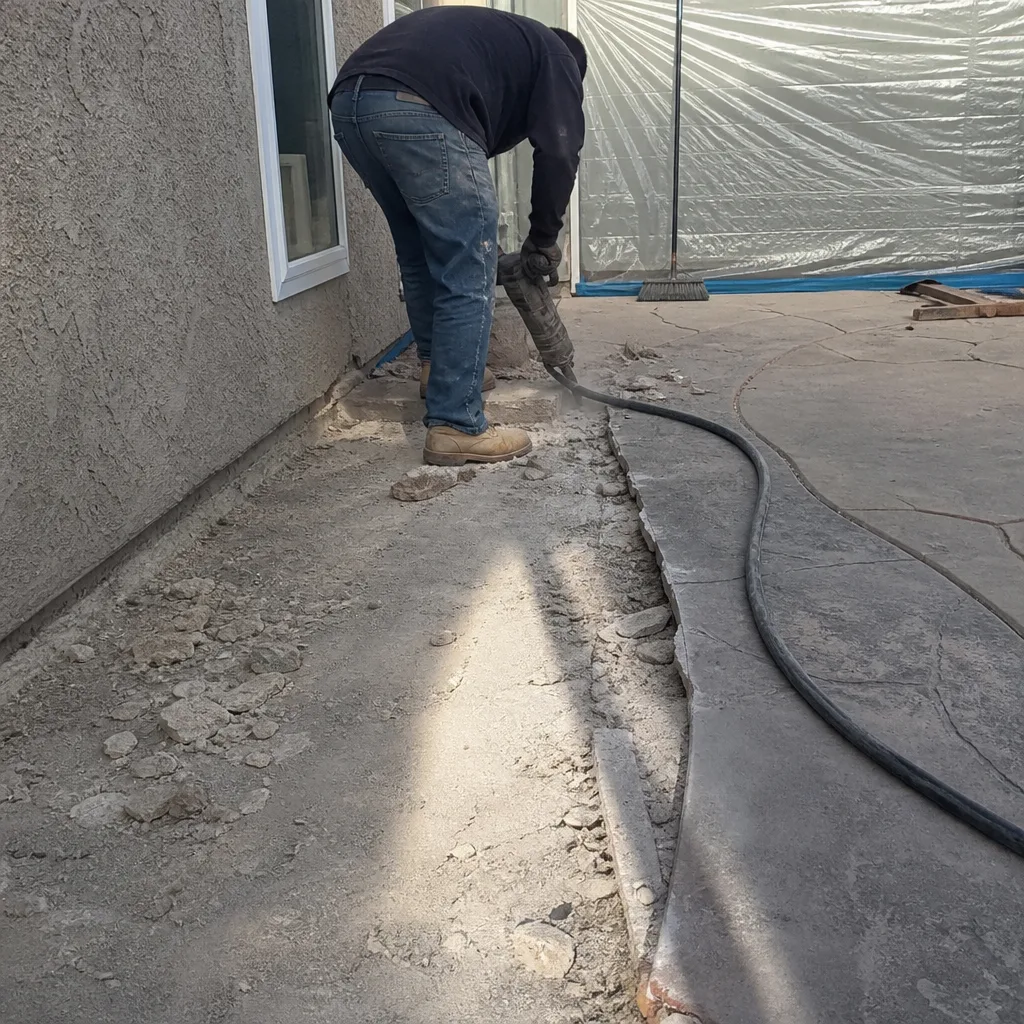 Before
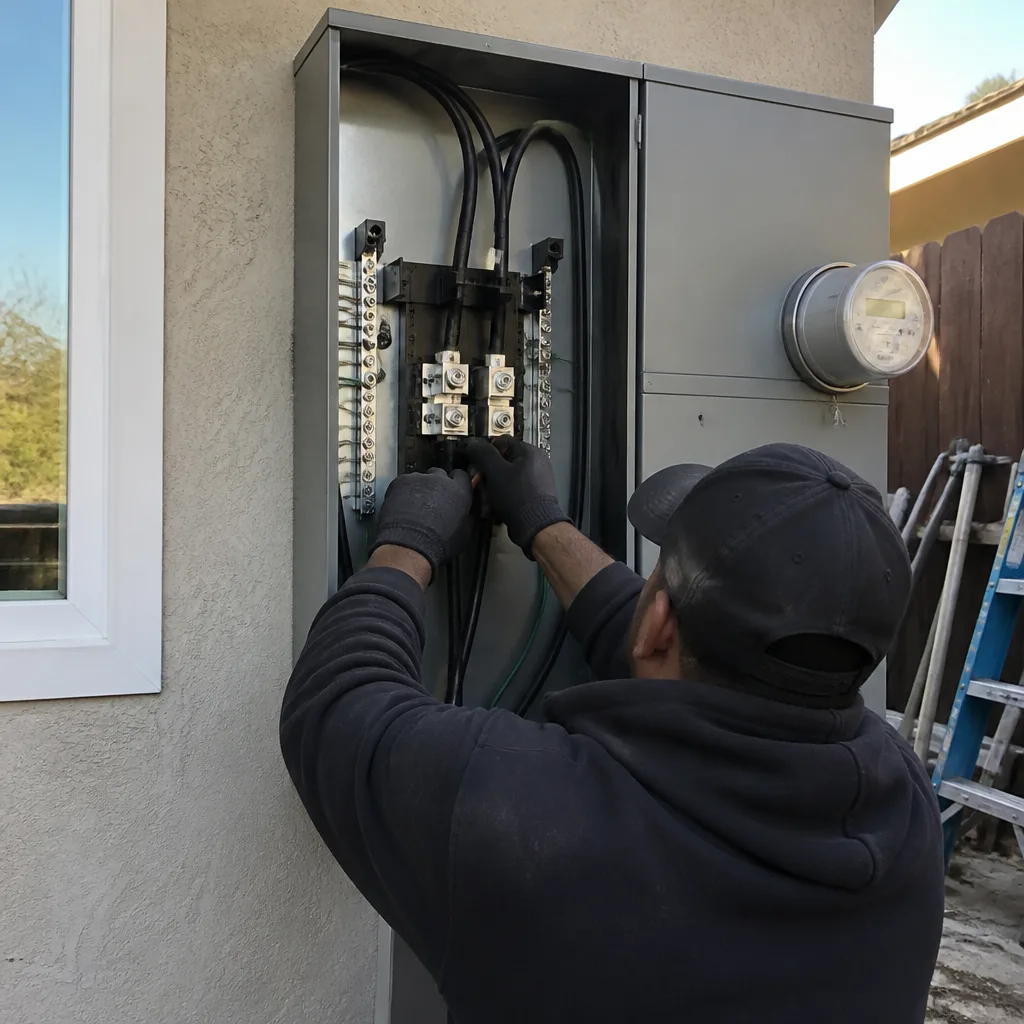 After
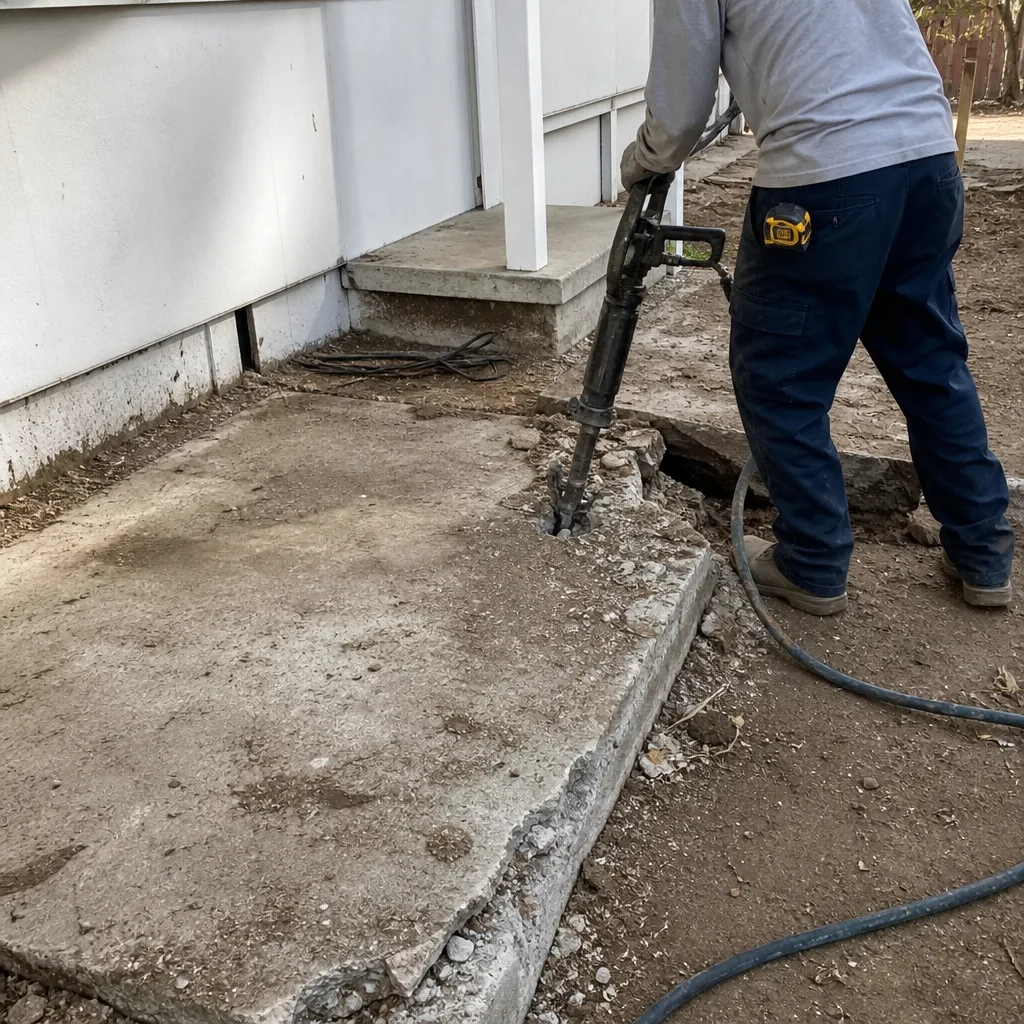 Before
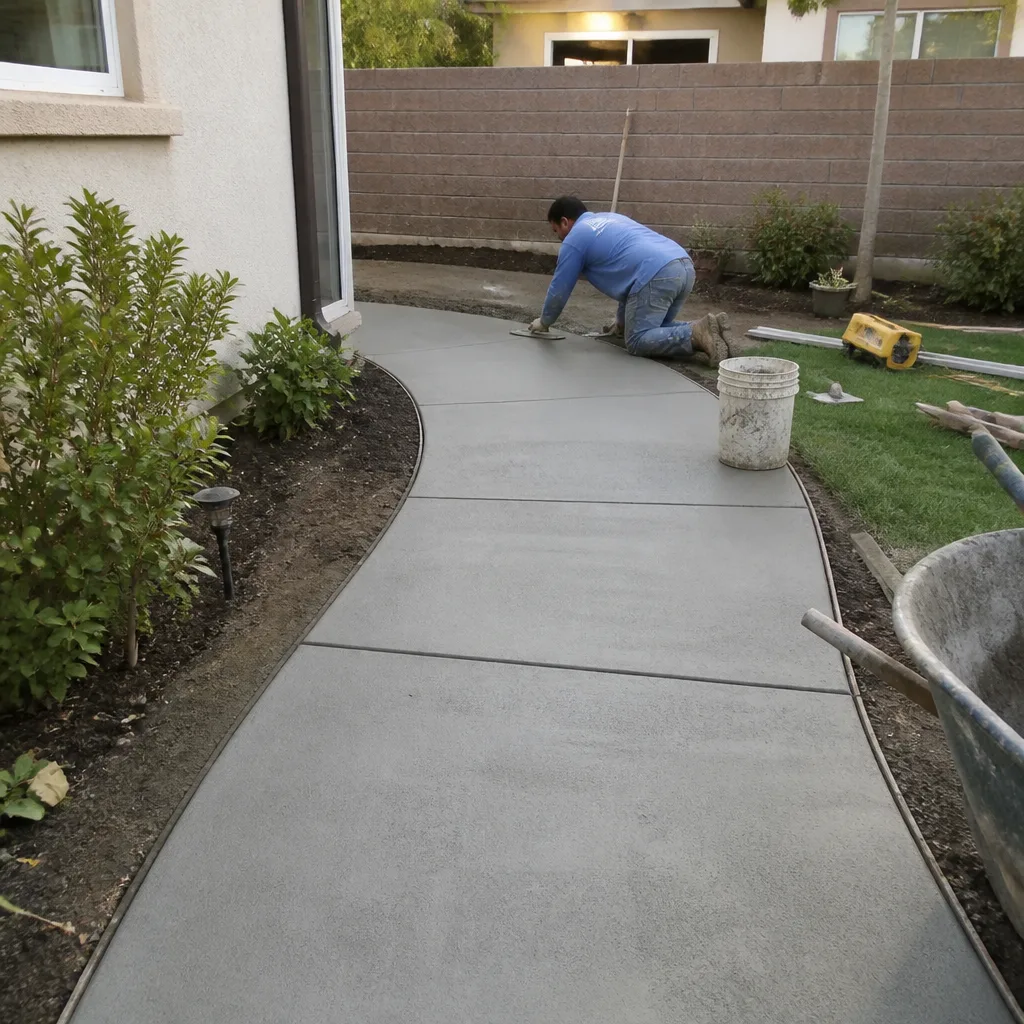 After